Interventional Care
We notice that you are visiting us from . This site only services US-based visitors. Would you like to visit the site that is appropriate for your location?
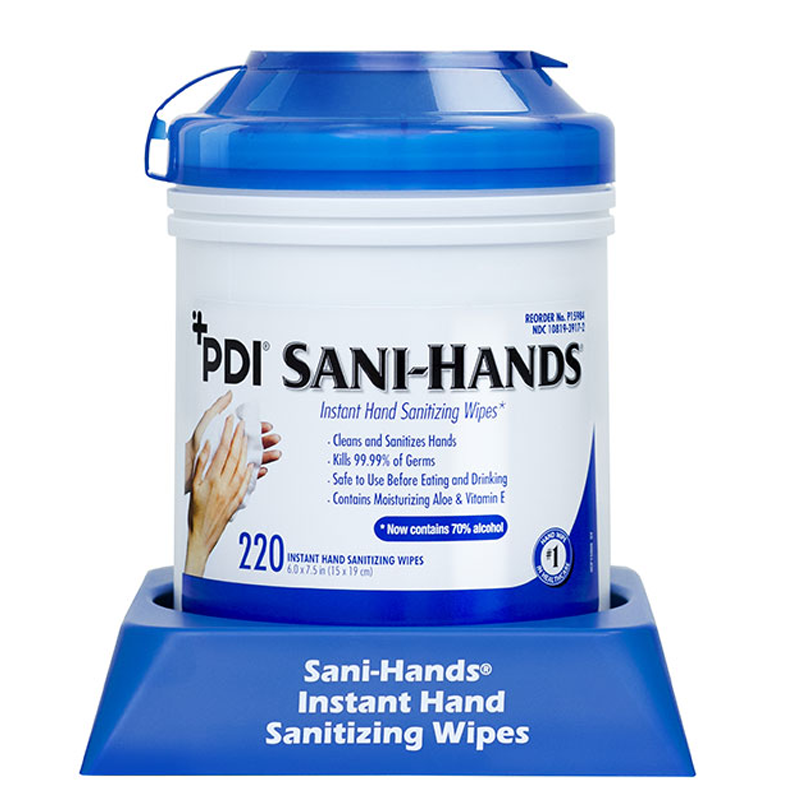
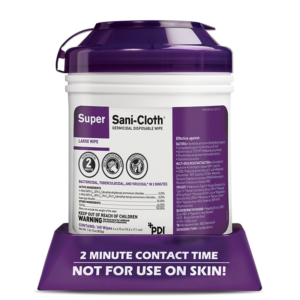
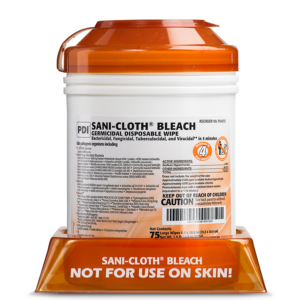
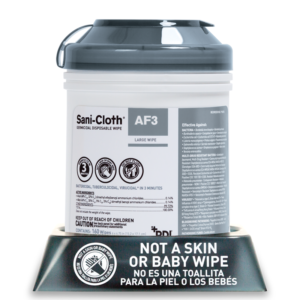
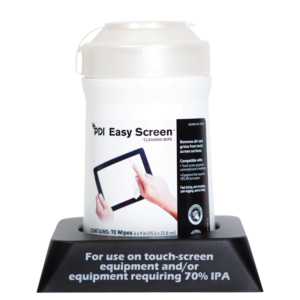
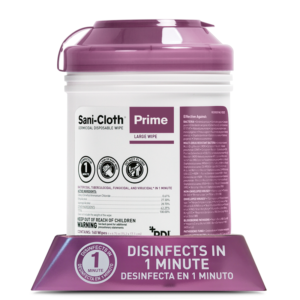
The countertop holder for canisters is perfect for nursing stations and carts. It helps display important product and compliance information, such as contact time and precautionary language.
SELECT A SIZE
Packaging | 10/case
Dimensions | 6.5" x 6.5" x 1.5
Packaging | 5/case
Dimensions | 6.5" x 6.5" x 1.5"

Test1

test2

test test test test

test test test test test test test
Do the PDI Sani-Cloth® products kill the Delta variant of SARS-CoV-2?
The EPA guidance states: “EPA expects all products on List N to kill all strains of SARS-CoV-2. Genetic changes to the virus do not impact the efficacy of disinfectants. List N disinfectants work by chemically inactivating viruses. The difficulty of killing a virus depends on its physical features, and the recent mutations to SARS-CoV-2 have not changed the basic physical properties.”
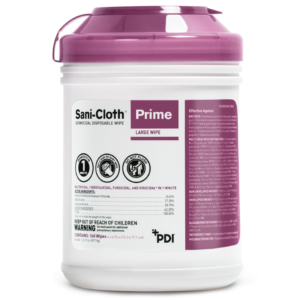
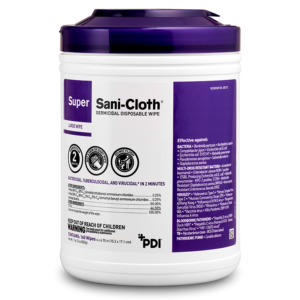
The PDI Sani-Cloth products that are on List N and have a specific claim for SARS-CoV-2 are:
Can PDI Germicidal Wipes and Sprays be used on toys?
PDI disinfectants are available in EPA-Registered formulations that are approved and labeled for use on hard, non-porous toys. The products clean and disinfect in a one-step process, unless visibly soiled. Once disinfected, toys should be rinsed with potable water (tap water) to remove any residue and allowed to air dry. According to the Association for Professionals in Infection Control and Epidemiology (APIC), the recommended procedure for disinfecting toys is “Toys should be cleaned/disinfected between patients, especially those that are visibly soiled, mouthed, or used by patients in isolation. Toys should be washed thoroughly; disinfected with a non-toxic, low-level disinfectant, and air-dried completely.” Infection control experts recommend only washable toys for sharing. Stuffed animals and toys that cannot be cleaned and disinfected should not be shared.
SOURCE: APIC Text of Infection Control and Epidemiology, Chapter 39, p. 14-15, Association for Professionals in Infection Control and Epidemiology, 2011. www.apic.org
Do PDI Germicidal Wipes and Sprays contain any ingredient listed as carcinogenic?
PDI disinfectants DO NOT contain any ingredients listed as carcinogenic by the National Toxicology Program (NTP), American Conference of Governmental Industrial Hygienists (ACGIH), and Occupational Safety and Health Administration (OSHA). This applies to ALL Sani-Cloth products, including Sani-24, Sani-HyPerCide, Sani-Cloth Prime, Sani-Prime, Super Sani-Cloth, Sani-Cloth AF3, Sani-Cloth Bleach, Sani-Cloth Plus, and Sani-Cloth HB brands. To register any disinfectant product with the US Environmental Protection Agency (EPA), the manufacturer is required to provide the EPA with the product’s manufacturing process, active and inactive ingredients, efficacy, chemistry, toxicity, and information about relevant impurities. The EPA conducts a thorough review of these materials and product ingredients. The agency would not register any product if it contained carcinogens without requiring relevant label warnings (40 CFR 156.10(g)(7)). As such, Sani-Cloth Wipes and Sani-Prime Spray do not contain carcinogenic label warnings.
Is Sani-HyPerCide® Germicidal Disinfectants a Sporicidal formulation?
Yes. Sani-HyPerCide® is the first ready-to-use Hydrogen Peroxide formula that is effective against Clostridioides difficile.
test
test2


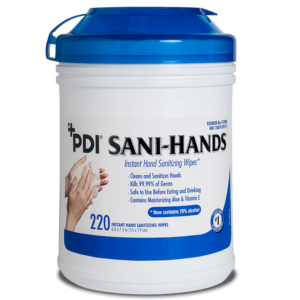
An ideal hand hygiene solution for staff, visitors, patients or residents who cannot get out of bed to clean their…
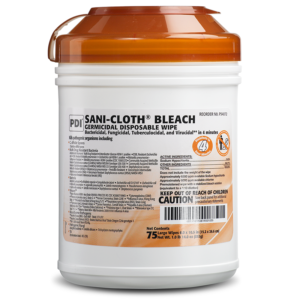
Ideal for disinfecting high risk areas contaminated with Clostridioides difficile (C. diff.) spores and Norovirus.
Kills SARS-CoV-2
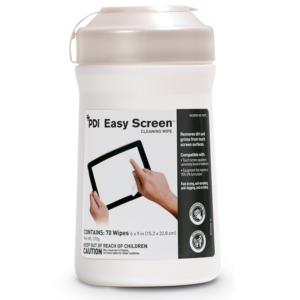
Finally, a compatible 70% IPA touchscreen cleaner that works at the speed of technology.
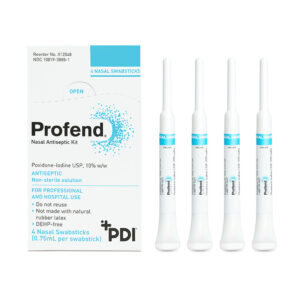
Povidone-Iodine USP, 10% w/w nasal antiseptic
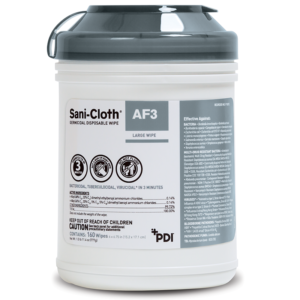
Protecting your staff and patients has never been easier! Alcohol and fragrance free formula is ideal for use around those…
Kills SARS-CoV-2
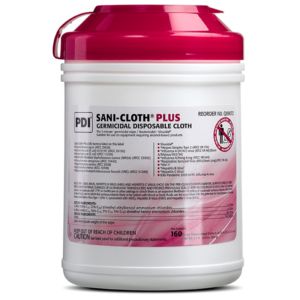
Ideal for use in alternate care settings, including physician and dental offices.
Kills SARS-CoV-2
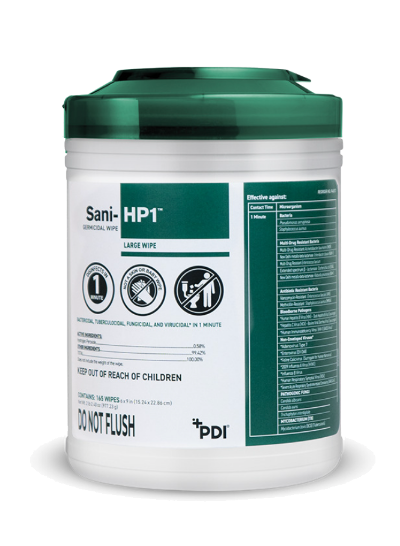
Interested in upgrading your disinfection practices? Get in touch with one of our team members today.
citations